Featured project · Raleigh
The North Carolina State Capitol grounds
Caring for the people's ground during America's 250th year.
The project
More than one job on the people's ground.
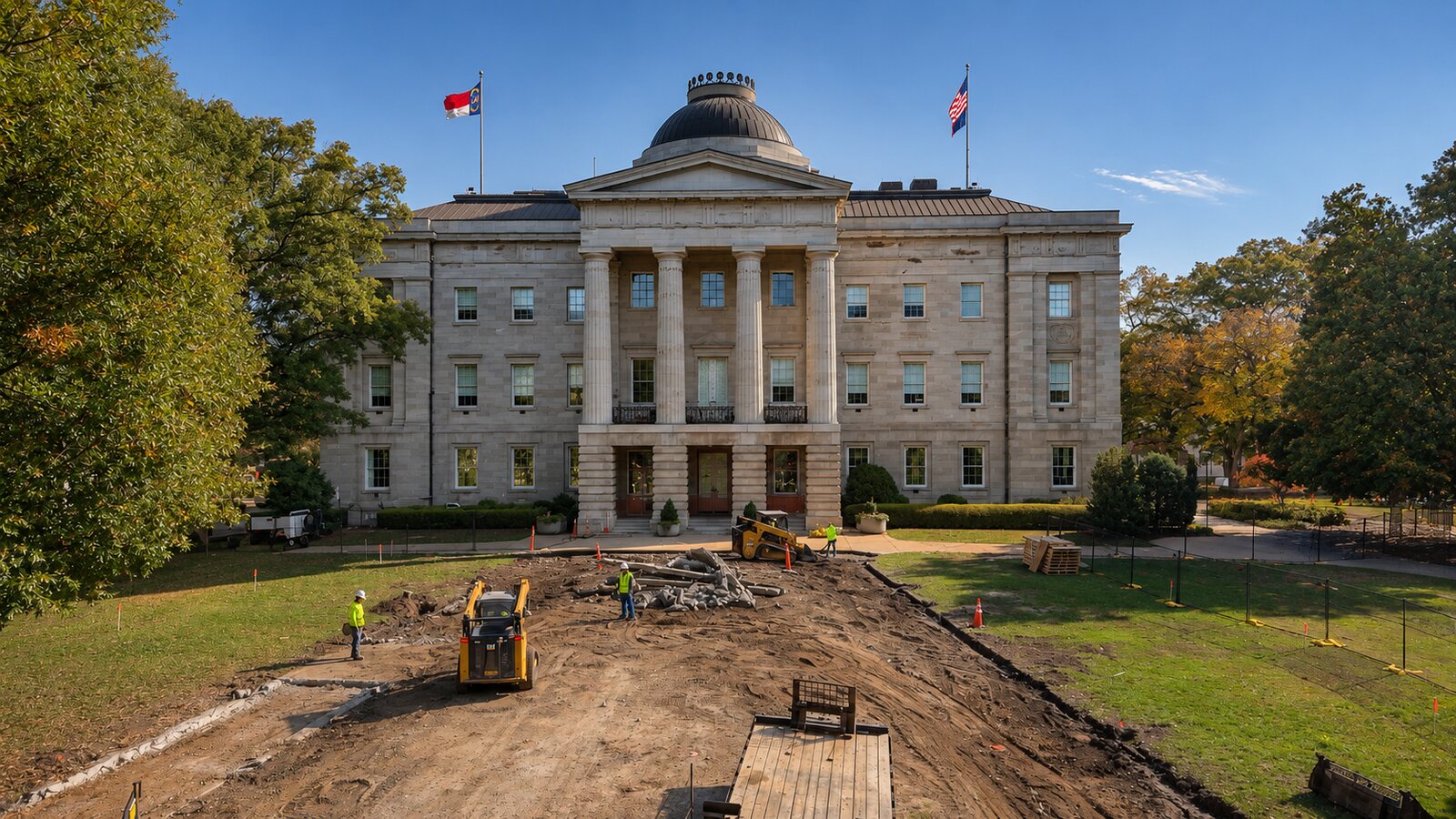
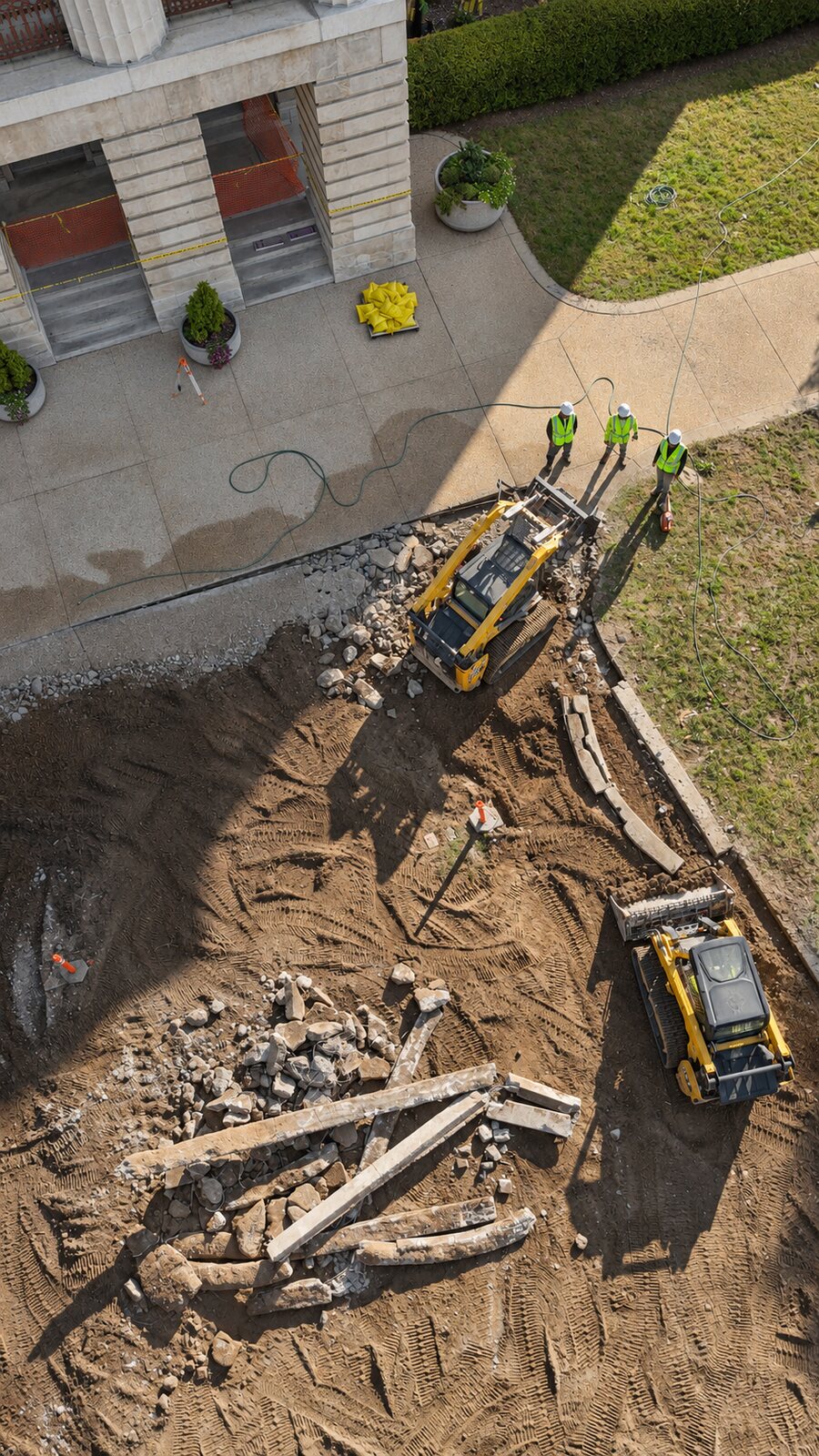
Limitless Lawns has worked on the Capitol grounds more than once. In June 2024 our crew laid new big-roll sod in front of the Capitol. In November 2026, with part of the grounds closed for sidewalk repairs, we handled the work from beginning to end: breaking out the old paving and curb in front of the portico, hauling it away, and excavating and grading the ground.
Work on a National Historic Landmark is slow on purpose. Machines run on protected routes, the turf around the work is kept off, and the finished grade has to meet the existing walks and steps of an 1840 building.
Laying big-roll sod in front of the Capitol (the 2024 sod job).
On site
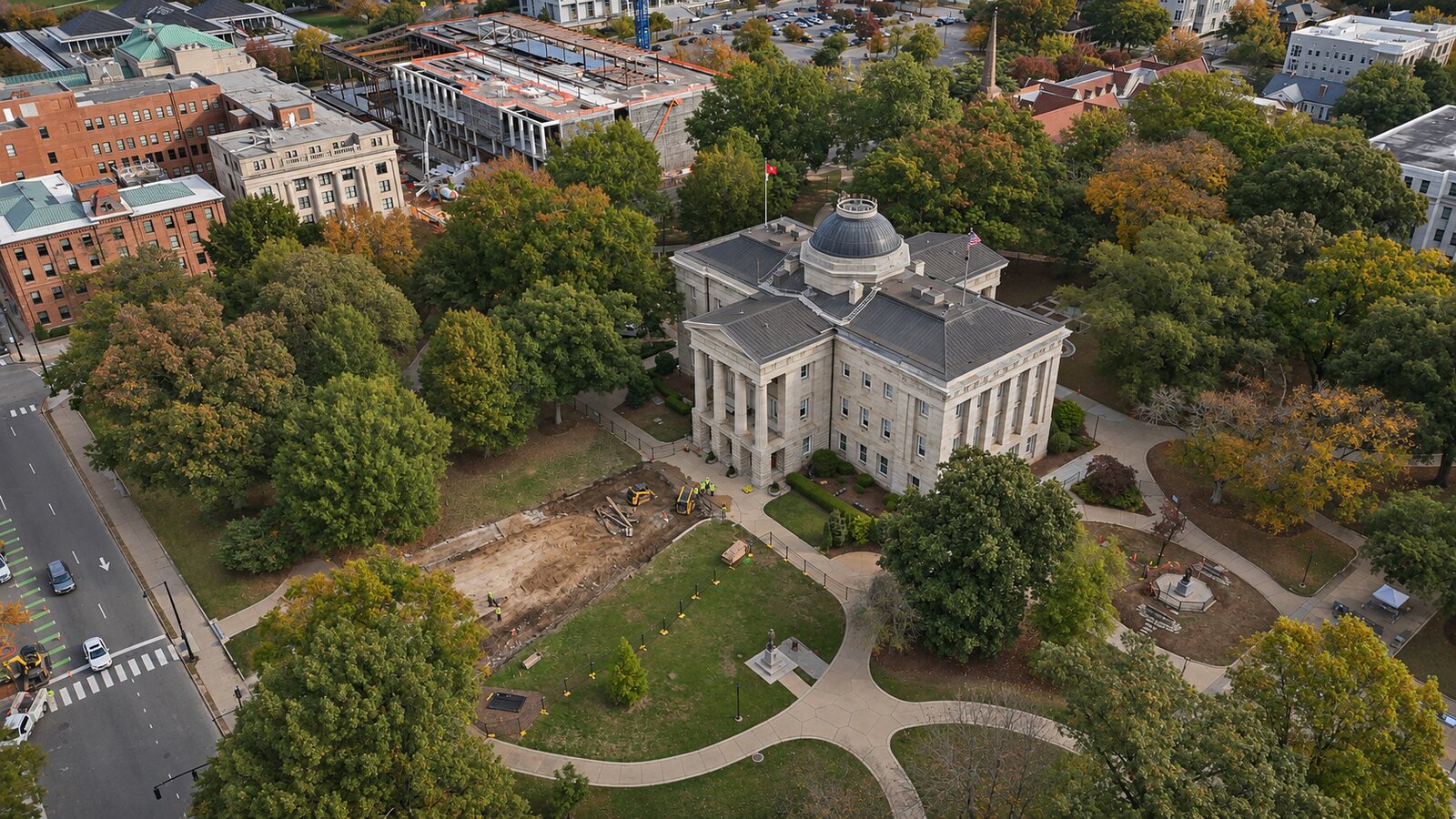
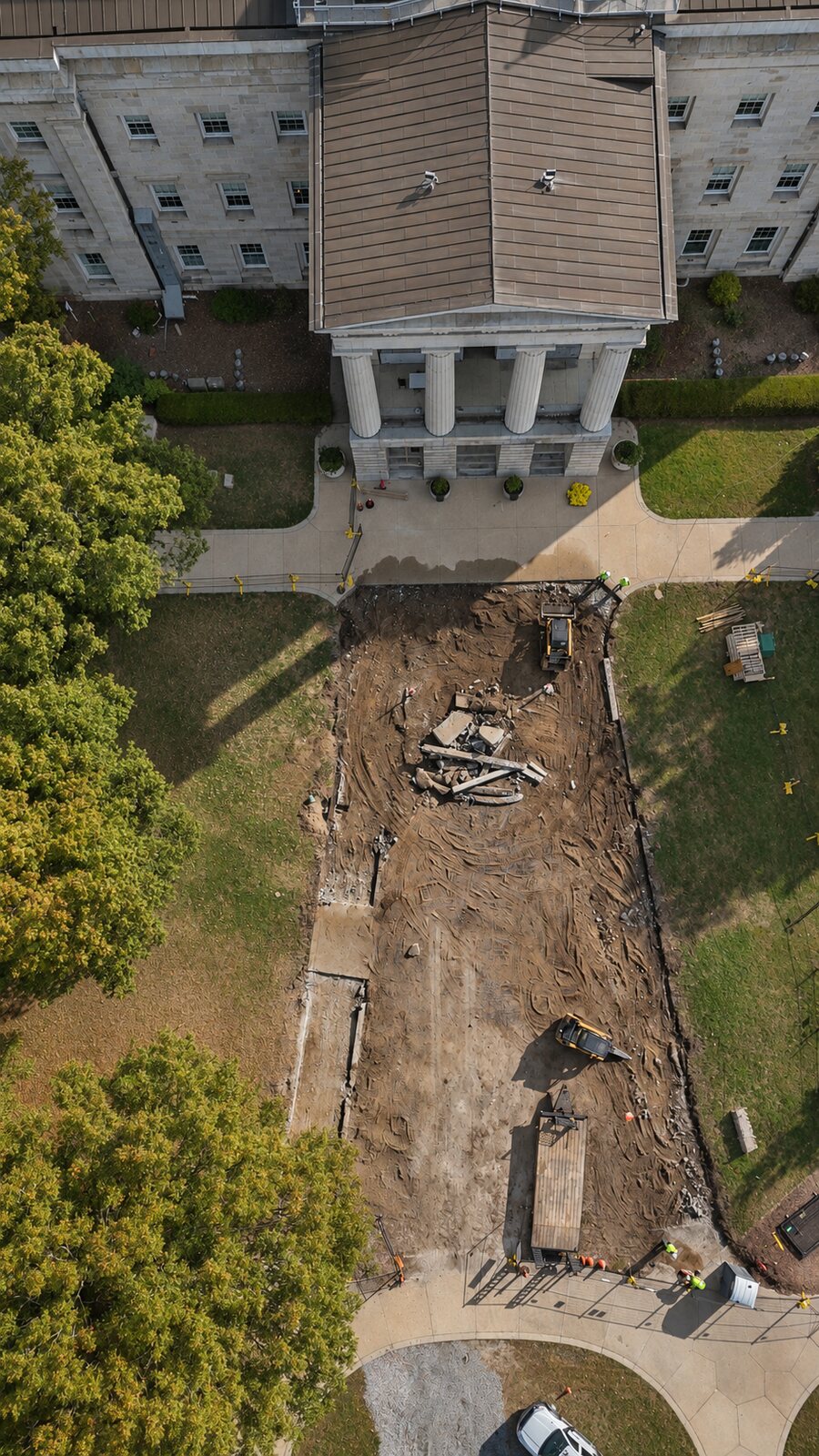
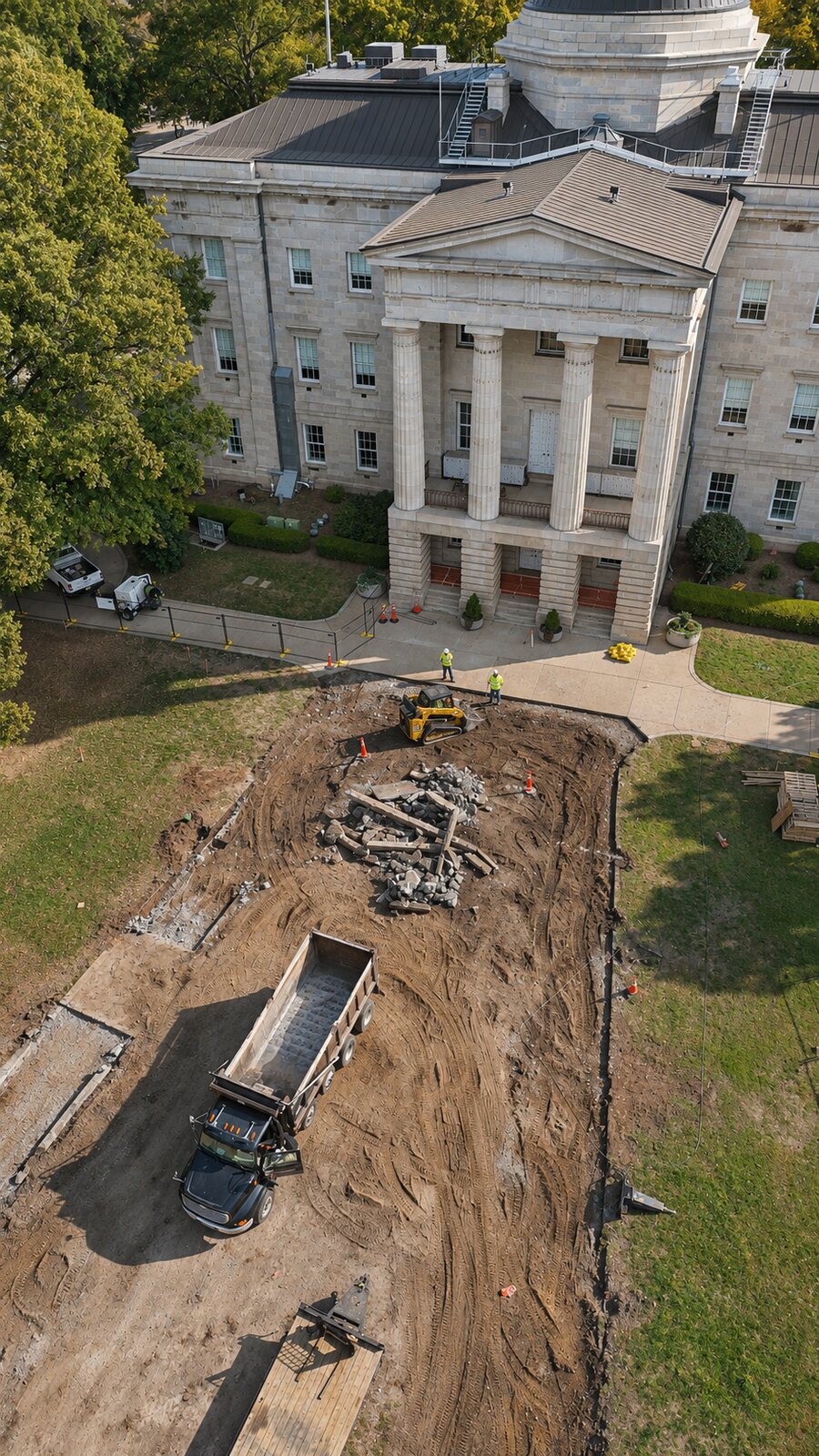
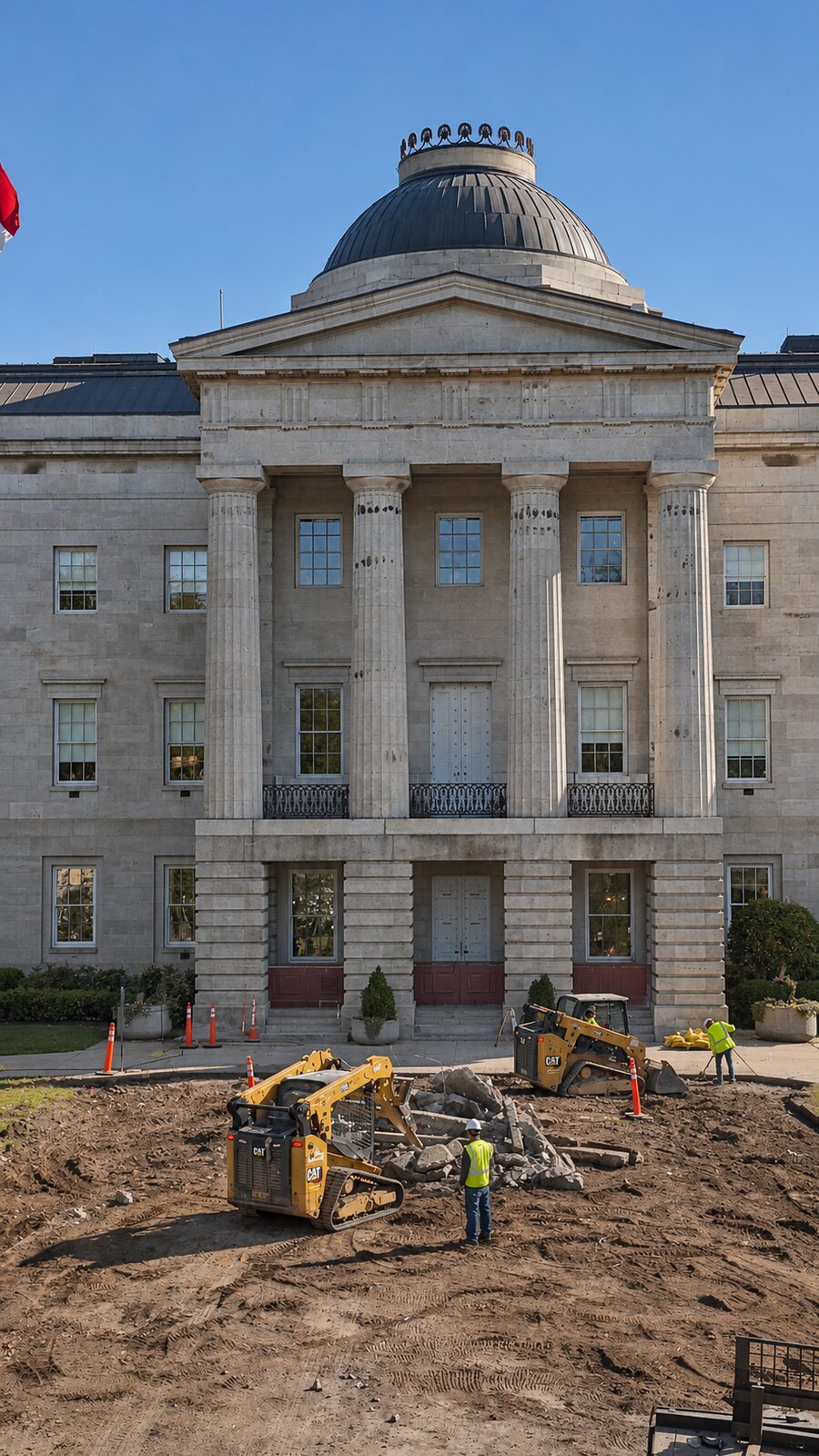
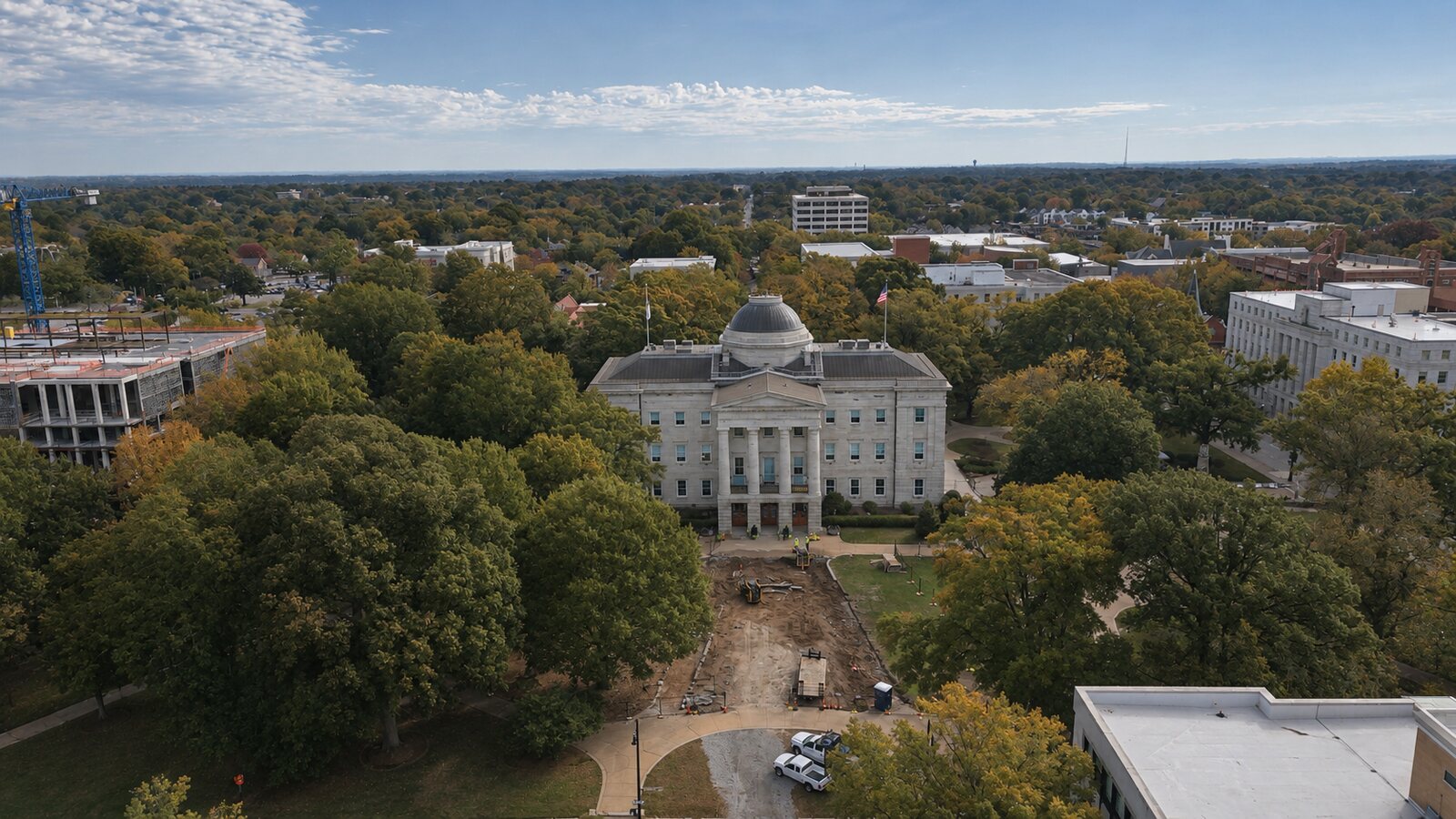
The work, from the air.
Old paving and curb broken out and hauled away, the panel excavated to grade, and timber mats carrying the machines so the lawn around the work stays protected.
Read the white paper
The project, the Capitol's history and North Carolina's part in America's 250th year, with every source listed.
The building
A Capitol built after a fire.
North Carolina's first State House was occupied in 1794 and burned in 1831. Its replacement was built between 1833 and 1840 to a Greek Revival design by Ithiel Town and Alexander Jackson Davis, carried through by David Paton. Its walls are gneiss from a state quarry in southeast Raleigh, hauled on the horse-drawn Experimental Railroad. The work was done in part by enslaved men rented to the project.
The General Assembly met here until 1963. The Capitol was named a National Historic Landmark on 6 November 1973, and it still holds the Governor's office.
The square
Union Square, the center of Raleigh.
William Christmas laid out Raleigh in 1792 on a one-square-mile grid, with Union Square at its center. Today the Capitol stands on a six-acre square of lawns, walks, trees and monuments, cared for by the North Carolina Department of Natural and Cultural Resources.
America 250
North Carolina, first in freedom.
On 12 April 1776 the Halifax Resolves made North Carolina the first colony to officially sanction independence. In 2026, the nation's 250th year, the state's America 250 NC commemoration brought "Capitol 250: North Carolina Freedom Fest" to the Capitol building and grounds on the Fourth of July. We are proud to have worked on the same ground.
Sources
- NC Historic Sites, NC State Capitol: History
- NC Historic Sites, Construction of the Capitol
- NCDNCR, State Capitol highway marker H-4 (2023)
- NCDNCR, the Capitol as a National Historic Landmark (2016)
- The Cultural Landscape Foundation, William Christmas
- NCDNCR, Union Square walking tour (2025)
- America 250 NC, About
- NCDNCR, Capitol 250: North Carolina Freedom Fest (2026)
- NC Historic Sites, NC State Capitol (grounds notice)
History is as published by the sources above, read 21 November 2026. Project details are Limitless Lawns' own.
Planning a project? Tell us about it and we will come and look.
Request a quote