Home / Guides / Landscape lighting
Landscape lighting that looks designed rather than installed
Three decisions carry almost all of it: where the light comes from, how warm it is, and how much of it there is. Fixture choice matters far less than any of those.
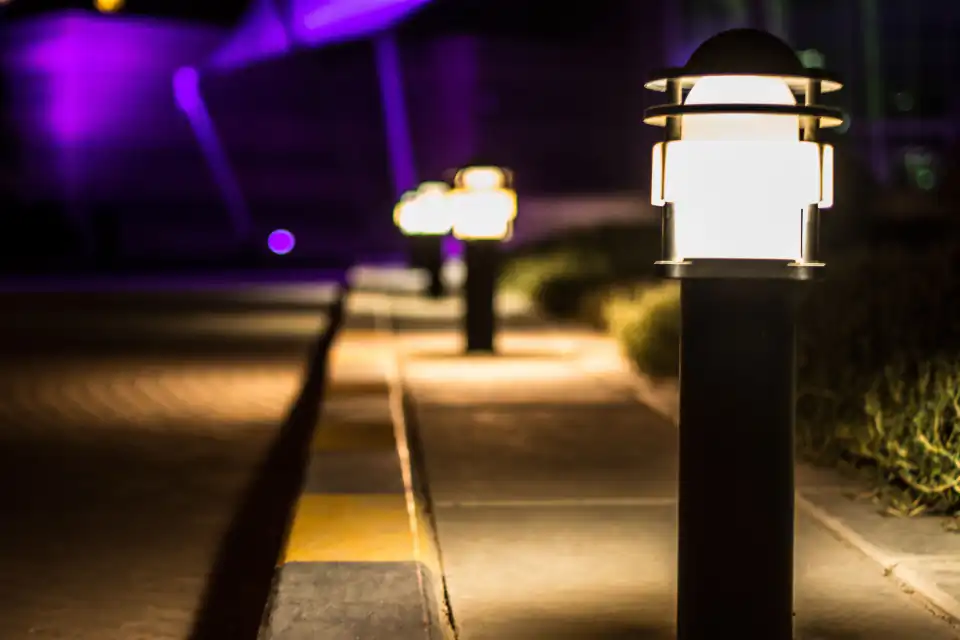
Light the destination, not the walker
A path is lit so you can see the path. Fixtures set every ten feet in a straight line read as a runway; the same number staggered and set back at twenty reads as a garden that happens to be lit.
Aim for pools of light with dark between them. Continuous even lighting flattens everything and is the surest sign nobody designed it.
Warm, and all the same warm
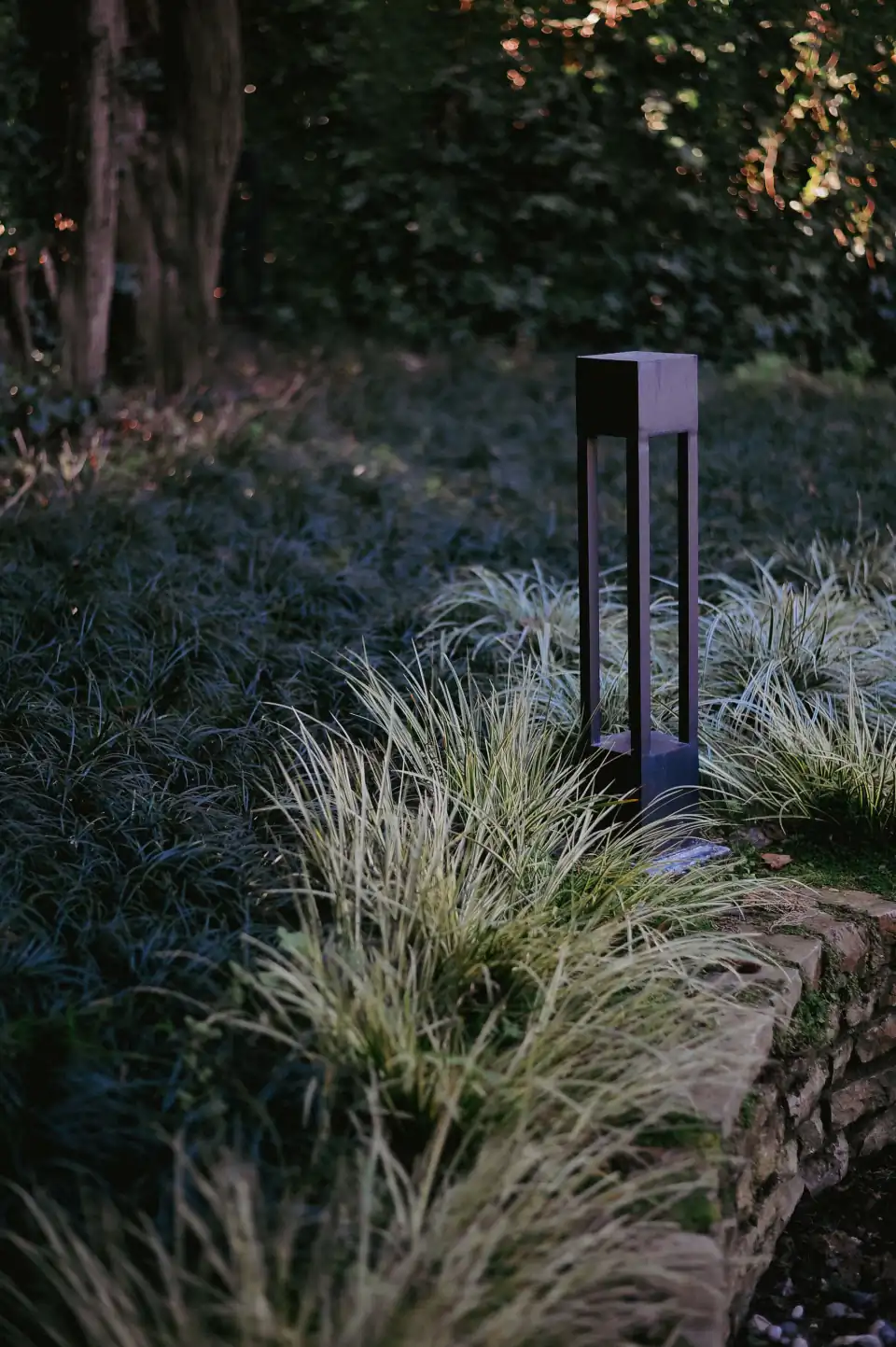
Stay around 2700K. Cool white on planting makes foliage look gray and dead, and it is the single most common mistake in retrofit lighting.
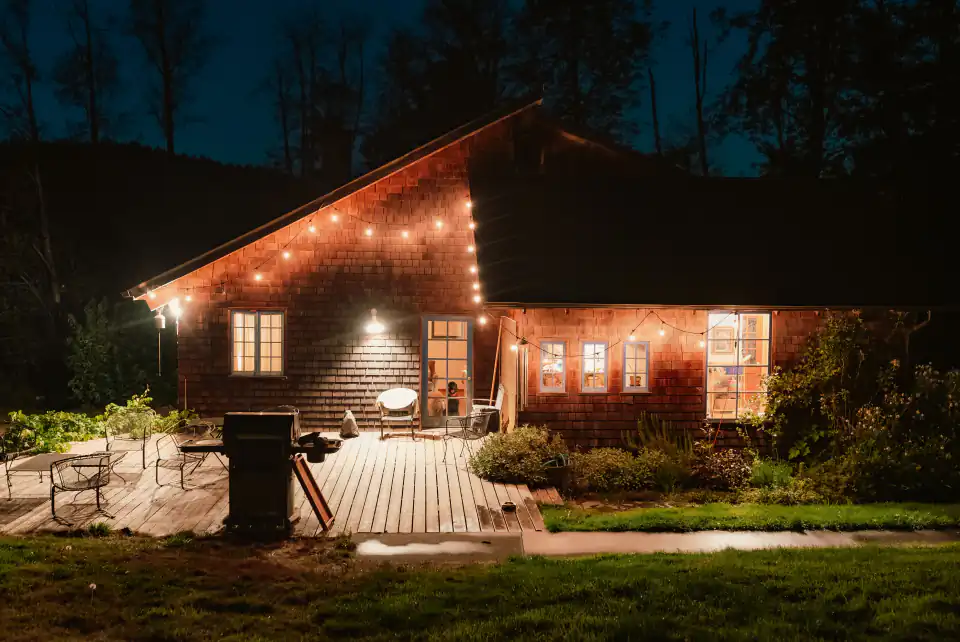
Mixing color temperatures across a garden is worse than any individual choice. One temperature, everywhere.
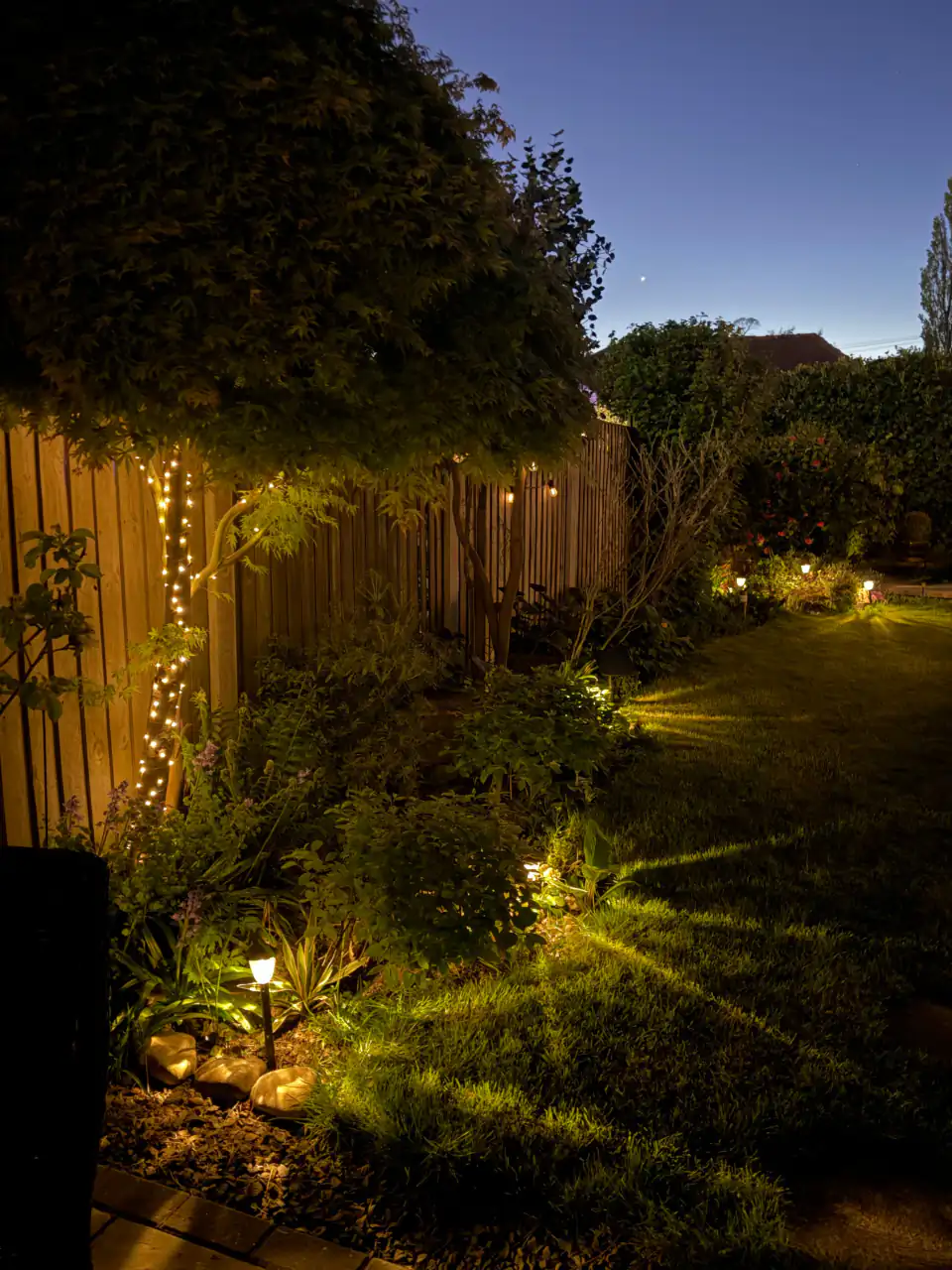
Uplighting, and when it works
Uplight a trunk with real bark and structure and you get a sculpture. Uplight a dense canopy and you mostly light the underside of leaves and the sky above them.
Set the fixture back from the trunk, not against it, and shield it so the person on the patio sees the tree and not the lamp.
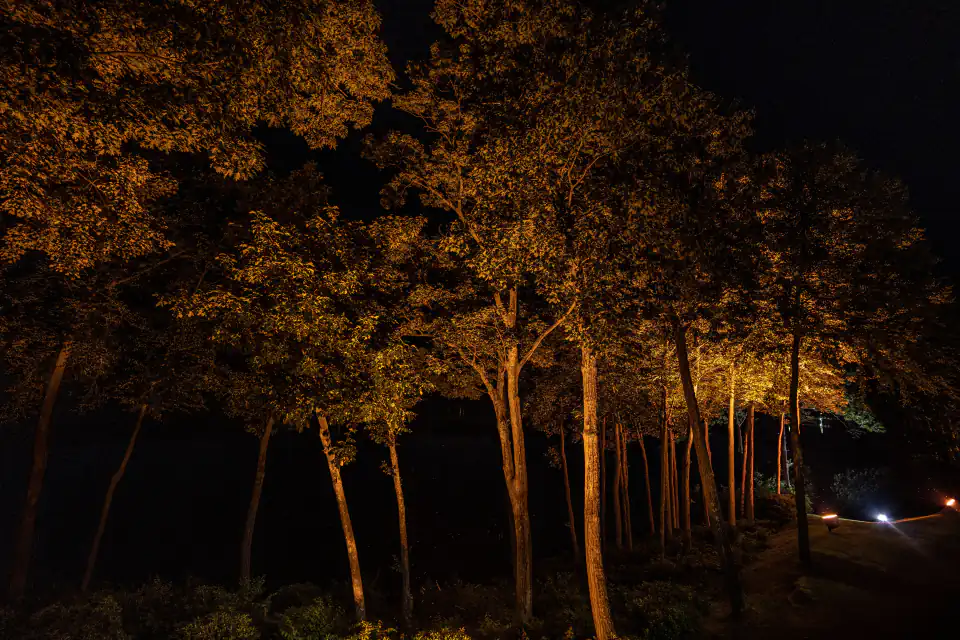
Line voltage, low voltage and solar
Low voltage is the default for good reasons: safe to work on, easy to extend, and fixtures can be moved as planting grows.
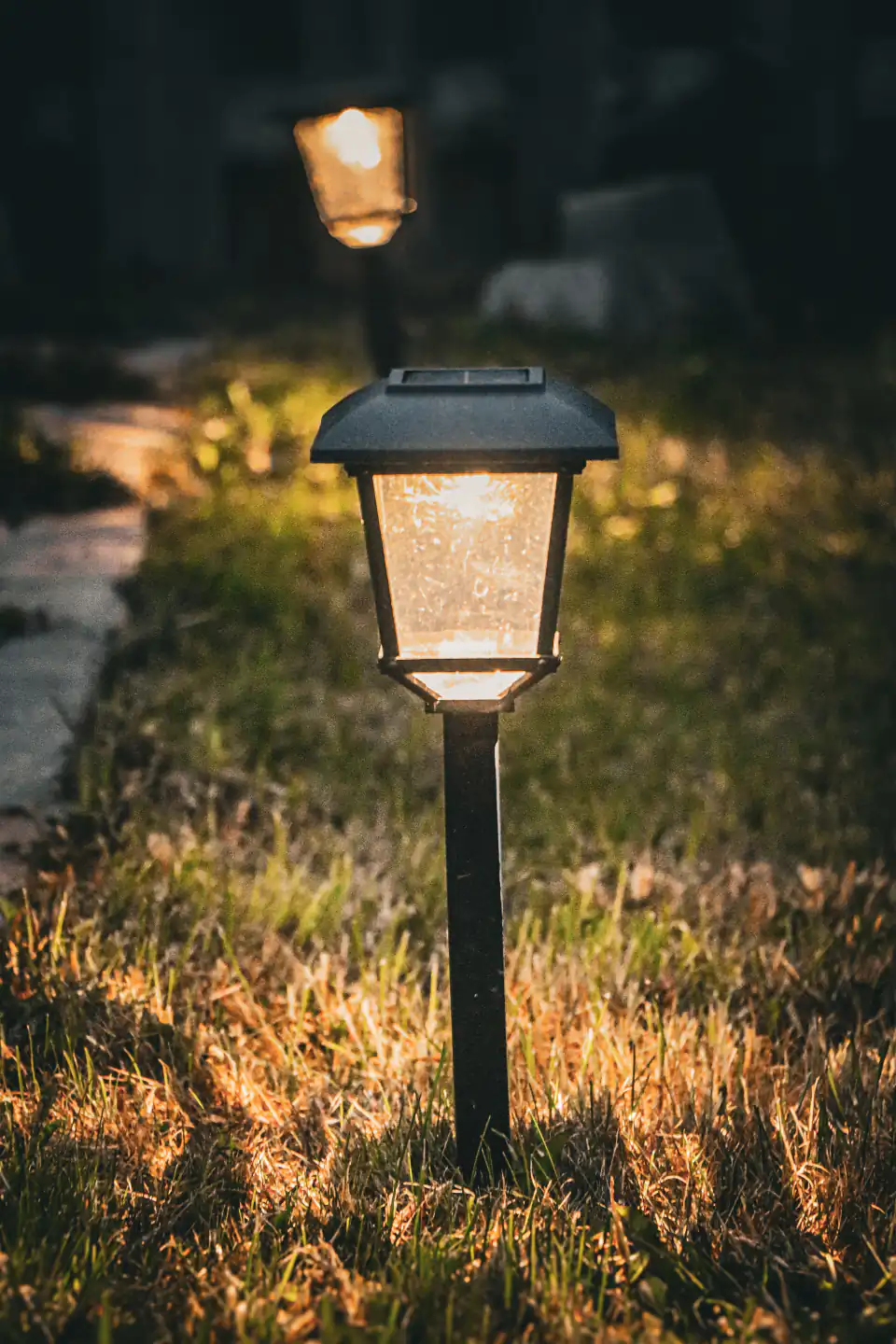
Solar is fine for marking a path edge and poor at anything you actually need to see by. Under a tree, which is where people want it, it never charges.
Common questions
Asked often enough to answer here.
What color temperature should landscape lighting be?
How far apart should path lights be?
Are solar landscape lights any good?
More guides
Other things worth knowing.
Planning a project? Tell us about it and we will come and look.
Request a quote