Angier, North Carolina · serving the Triangle CareersSign in (919) 414-2255

Home / Guides / Sod and new lawns

Sod, seed and starting a lawn on a new build

On a new subdivision lot the topsoil usually left on a truck years ago. What you are planting into is subsoil, and that decides almost everything that follows.
A new house with a freshly graded, raked dirt yard ready for seed or sod
Grade first. Everything you get wrong here you pay for every year after.

What a builder's grade is and is not

A builder grades a lot so water leaves the house. That is a drainage requirement, not a lawn specification, and the two are not the same thing.

Check it before you plant: where does water sit after rain, and where does it go? Fixing grade after a lawn is established means taking the lawn off again.
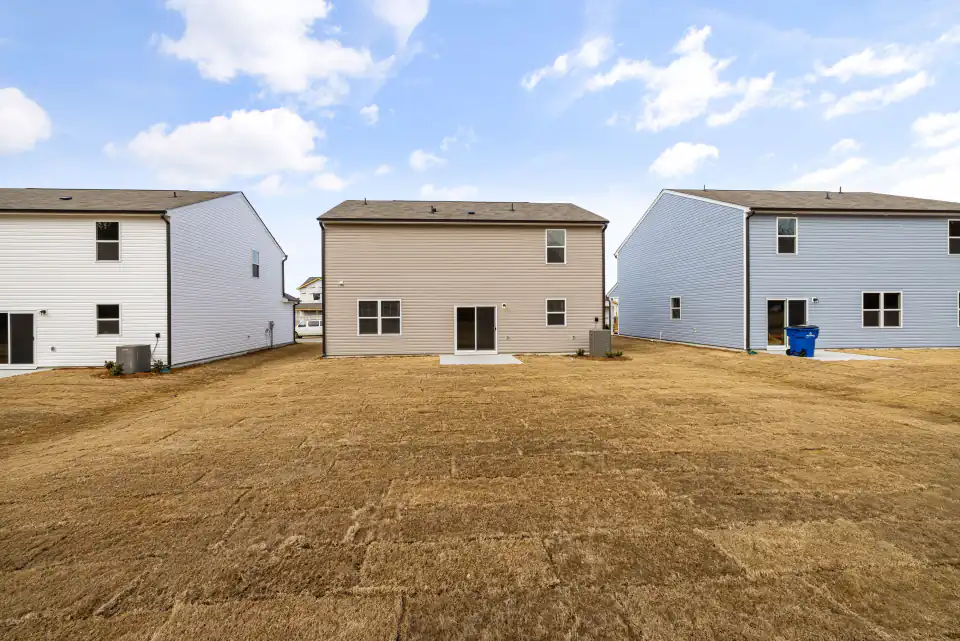
The back of a new house with bare compacted ground
Builder's fill is subsoil. Topsoil is what grass actually roots into.
A newly built house fronted by bare graded dirt where the lawn will go
The builder graded it. Whether it drains is a separate question.

Sod or seed

Sod is a lawn the same afternoon, it holds a slope immediately, and it can go down in almost any month. It costs several times what seed costs.

Seed is cheap and seasonal. Fescue seed wants September; seed sown in spring competes with crabgrass and generally loses. On a slope seed washes before it roots.

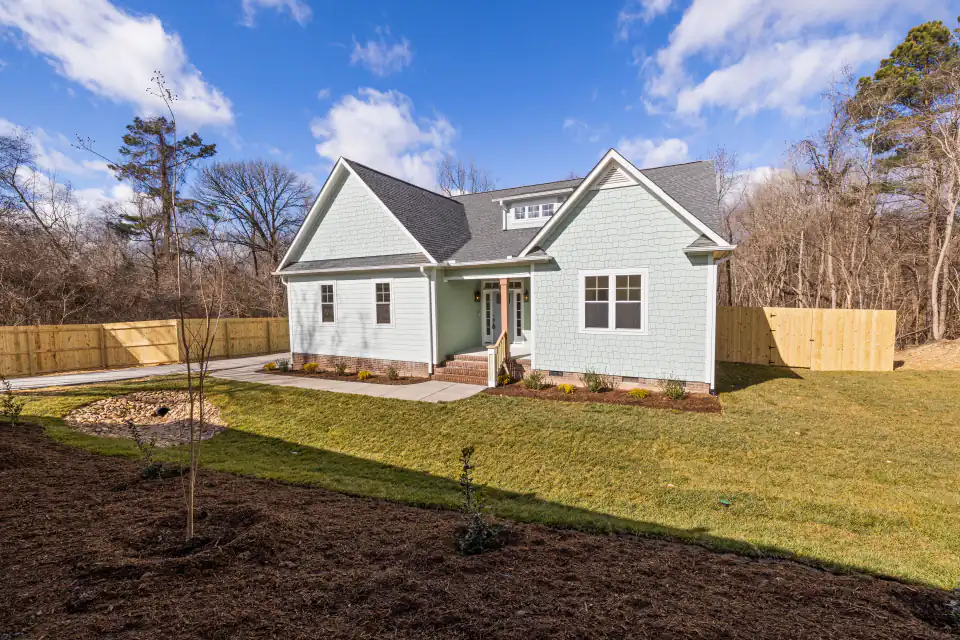
A modern farmhouse with newly laid sod across the front
Fresh sod needs water twice a day for two weeks. There is no shortcut.
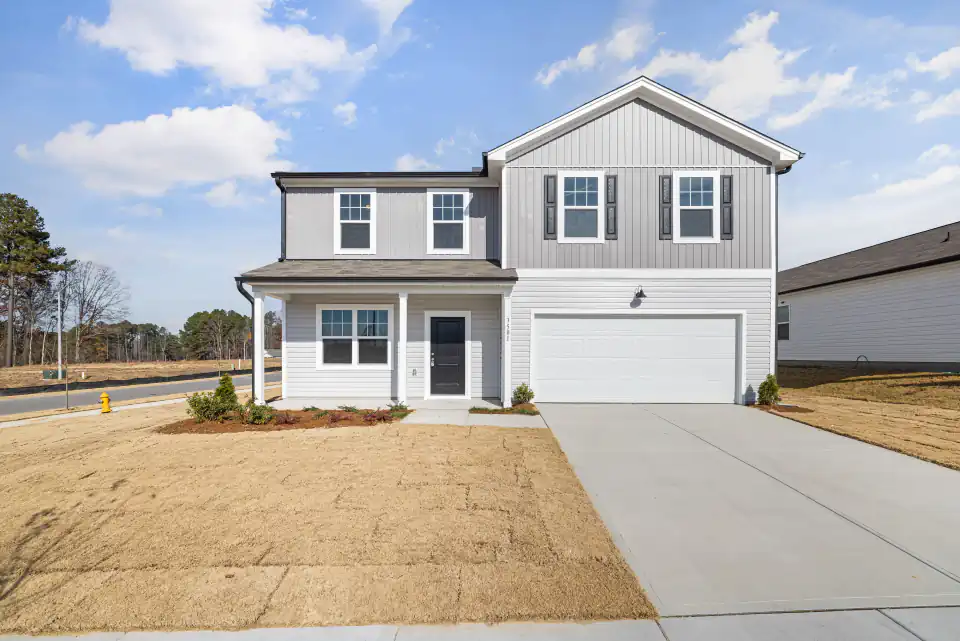
A new build with a fresh concrete driveway and an unplanted yard
Seed in spring on bare clay mostly grows weeds. Sod does not care what month it is.
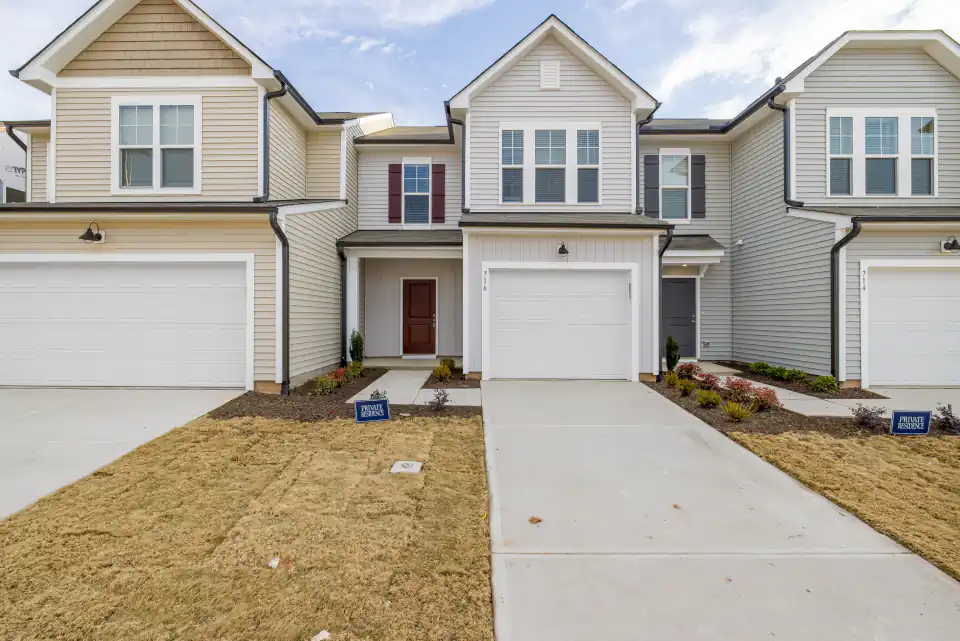
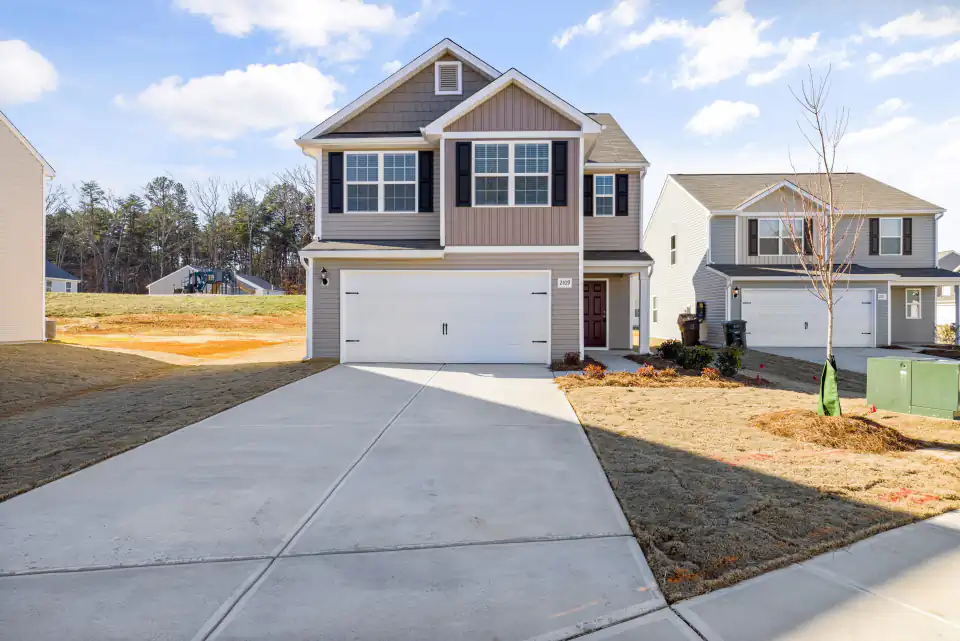
A new townhome with bare soil either side of the driveway
Small front yards are the cheapest sod job and the fastest curb appeal.

The first two weeks decide it

Fresh sod needs water twice a day for about two weeks, then less often and more deeply as it roots. There is no shortcut and no substitute, and more sod dies of thirst in week one than of anything else.

Keep traffic off it. Lift a corner at two weeks; if it resists, it has rooted.
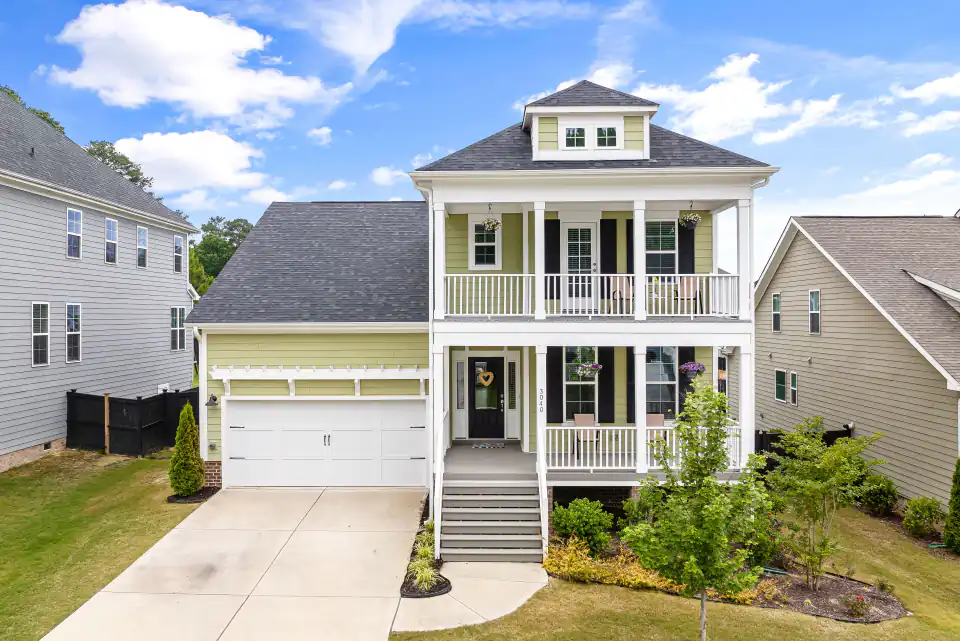
A white two-story home with a small, freshly established front lawn
A new lawn's first season decides its next ten.
A new home with a wide driveway and newly planted shrubs
Young plantings need water more than they need fertilizer.
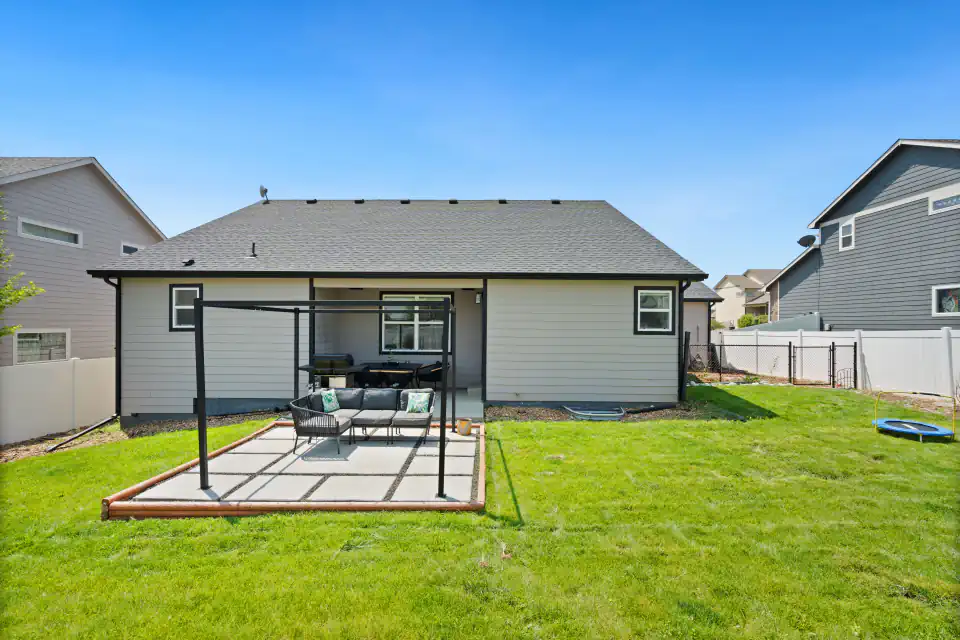
A backyard with a steel patio frame and furniture on a green lawn
Anything you set on turf kills the turf under it within a month.
Houses behind a rendered wall with newly planted street trees
Young street trees are a twenty-year investment with a two-year failure window.

Common questions

Asked often enough to answer here.

Is sod better than seed?
Sod gives an instant lawn, holds slopes and can be laid almost any month, at several times the cost. Seed is cheaper but seasonal (fescue wants autumn), and it washes on any slope before it roots.
How long does new sod take to root?
About two weeks in growing conditions. Lift a corner: if it resists, it has rooted. Keep traffic off until then.
How often do I water new sod?
Twice a day for roughly the first two weeks, then less frequently and more deeply as roots go down. Thirst in the first week kills more new sod than anything else.

Planning a project? Tell us about it and we will come and look.

Request a quote